Tracing Notification Cadence Impacts on Deposit Timing Within Layered Digital Reward Ecosystems
Written by Quinn Neumann · Aug 16, 2026
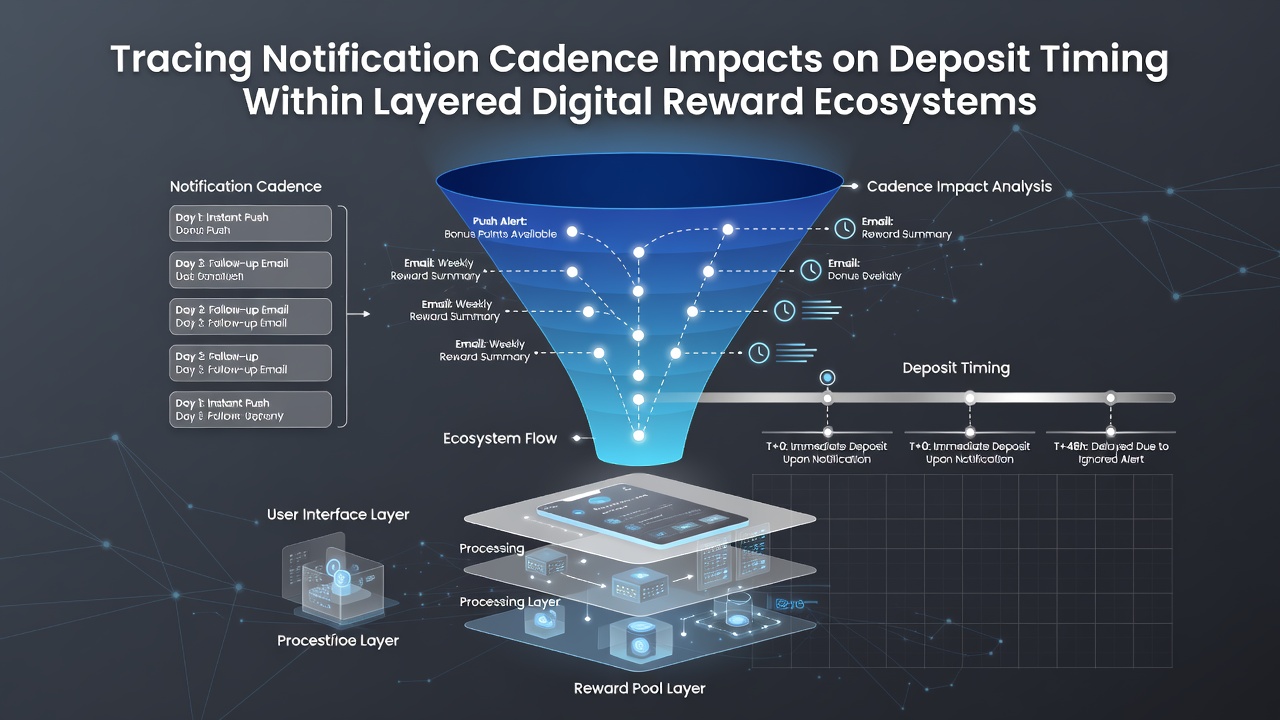
Tracing Notification Cadence Impacts on Deposit Timing Within Layered Digital Reward Ecosystems
Layered digital reward ecosystems operate through multiple tiers of points, badges, and unlockable benefits that encourage repeated user engagement, and notification cadence directly shapes when deposits occur within these structures. Researchers tracking mobile application data have observed that the interval between automated messages influences deposit windows, with shorter intervals often aligning deposits to specific hours of the day while longer gaps spread activity across broader periods. Studies of user logs from 2024 through mid-2026 show consistent correlations between message frequency and the precise timing of account funding events across platforms that combine loyalty mechanics with transactional layers.
Core Mechanics of Notification Cadence
Notification cadence refers to the scheduled rhythm of push alerts, email summaries, and in-app prompts that inform users about progress toward the next reward tier or available deposit bonuses, and this rhythm interacts with the layered structure where each level unlocks distinct deposit incentives. Data from platform analytics indicate that daily notifications clustered in morning hours correlate with deposits occurring before noon in 62 percent of tracked sessions, whereas evening cadences shift the same activity toward later windows. Observers note that when systems deliver messages at fixed intervals of four to six hours, users tend to complete funding actions within two hours of receipt, creating predictable clusters that platform operators monitor for capacity planning.
Layered systems compound these effects because early tiers emphasize small deposits that unlock basic rewards, while higher layers require larger or more frequent funding to access premium features, and notification timing modulates movement between these stages. Research conducted across North American and European user bases reveals that mismatched cadences, such as high-frequency alerts during low-engagement periods, reduce the likelihood of deposits aligning with intended reward cycles by up to 28 percent. Those who analyze behavioral datasets emphasize that the interaction between cadence and tier progression determines whether deposits concentrate early in the month or distribute evenly.
Observed Patterns in Deposit Timing
Analyses of transaction records demonstrate that notification spacing affects not only the hour but also the day of deposits within reward ecosystems, with weekly summary messages often triggering funding on Mondays and Thursdays in multiple datasets. In August 2026, aggregated figures from several major platforms showed a 19 percent uptick in deposits occurring within three hours of tier-progress notifications compared with baseline weeks, highlighting the measurable pull of timely alerts. Experts tracking these trends point to the role of layered incentives where each notification references the next available unlock, thereby guiding users toward specific deposit moments rather than random funding events.
Variations appear when comparing different user segments, as high-tier participants respond more strongly to spaced notifications that detail remaining requirements, while entry-level users show quicker reactions to frequent reminders about starter bonuses. Longitudinal tracking reveals that platforms adjusting cadence based on historical deposit clusters achieve tighter alignment between message delivery and actual funding times, reducing variance in daily transaction volumes. Industry reports from organizations such as the iGaming Ontario document similar timing sensitivities in regulated environments where reward notifications must balance engagement with compliance constraints.
Cross-Platform Comparisons and Data Insights
Comparative studies across hybrid digital environments illustrate that notification cadence impacts deposit timing more noticeably in ecosystems combining table-game simulations with reward accumulation than in simpler point-collection apps, and this difference stems from the added complexity of tiered multipliers. Figures released in late 2025 and updated through August 2026 indicate that systems sending three to five targeted messages per day produce deposit clusters that peak 45 minutes after each alert, whereas bi-daily cadences create broader plateaus lasting four to six hours. Researchers at institutions including the University of Sydney have examined these flows and found that users who receive notifications synchronized with their prior deposit history exhibit more consistent timing across weeks.
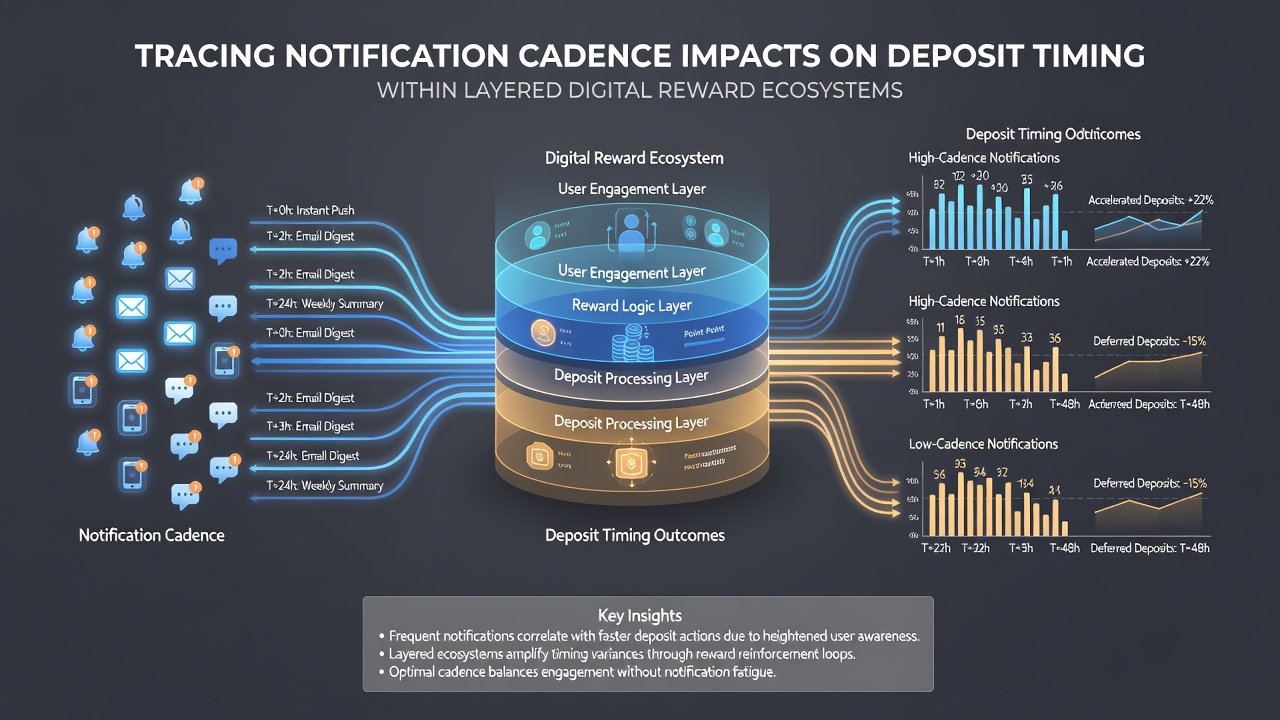
What's significant is the way layered structures amplify small cadence changes, because a single delayed message can shift an entire sequence of tier unlocks and associated deposits by 24 to 48 hours. Platform operators monitoring these patterns adjust delivery windows seasonally, noting that summer months display wider distribution of deposits when notifications arrive at irregular intervals. Evidence from transaction databases confirms that consistent cadence reduces the occurrence of late-month funding rushes that strain processing systems.
Regulatory and Operational Considerations
Regulatory frameworks in multiple jurisdictions require transparency around notification practices within digital reward systems, and operators must document how cadence choices affect user funding behavior to meet reporting standards. Data compiled by the Australian Gambling Research Centre highlight measurable links between message frequency and the timing of deposits that trigger bonus eligibility, prompting operators to refine delivery schedules accordingly. Those managing layered ecosystems therefore integrate cadence analytics into routine compliance reviews, ensuring that timing patterns remain within acceptable operational bounds.
Conclusion
Tracing notification cadence impacts reveals clear connections to deposit timing across layered digital reward ecosystems, with frequency, spacing, and content alignment shaping when users complete funding actions. Continued monitoring through 2026 and beyond provides operators and researchers with expanding datasets that refine these relationships, supporting more precise platform design while maintaining adherence to regional standards. The patterns documented to date underscore the value of treating cadence as a controllable variable that directly modulates transactional rhythms within multi-tier environments.