Navigating Promotional Credit Lifecycles Across Multi-Venue Digital Poker Circuits
Written by Quinn Neumann · Jul 26, 2026

Navigating Promotional Credit Lifecycles Across Multi-Venue Digital Poker Circuits
Promotional credits in digital poker environments function as time-bound incentives that operators deploy to attract and retain participants across interconnected platforms, and their lifecycles follow defined sequences of issuance, activation, utilization, and expiration that vary by venue network. Data from industry tracking services shows these credits typically carry 30-to-90-day validity windows, while redemption rules require players to meet wagering thresholds before converting balances into withdrawable funds. Observers note that multi-venue circuits compound these variables because credits earned on one site often carry transfer restrictions or conversion rates when moved to partner platforms.
Core Components of Credit Lifecycles
Issuance occurs through deposit matches, tournament qualifiers, or loyalty milestones, after which activation periods begin once players opt in through account dashboards. Utilization phases demand adherence to game-type restrictions, such as cash-game rake contributions or tournament buy-in allocations, and many circuits impose minimum play volumes before credits unlock. Expiration triggers automatic forfeiture unless players extend validity through additional deposits or loyalty tier upgrades, according to platform terms reviewed in mid-2026.
Multi-venue operators coordinate these stages through shared backend systems that log cross-site activity, yet differences in local regulatory overlays create friction points. For instance, credits generated under one jurisdiction's bonus cap rules may face reduced applicability when transferred to a venue operating under stricter contribution limits. Research from gaming analytics firms indicates that participants who track these variations across five or more partnered sites achieve higher overall redemption rates than those who engage single platforms exclusively.
Cross-Venue Synchronization Challenges
Players navigating several digital poker rooms encounter mismatched calendar events because promotional windows align with regional marketing campaigns rather than unified circuit schedules. A July 2026 data release from the Canadian Gaming Association highlighted seasonal spikes in credit issuance during summer tournament series, yet simultaneous expiration clusters across US-facing and offshore sites created bottlenecks for users attempting to consolidate balances. Synchronization tools provided by circuit operators allow calendar imports that flag overlapping deadlines, while automated alerts notify participants of impending forfeitures based on aggregated play histories.
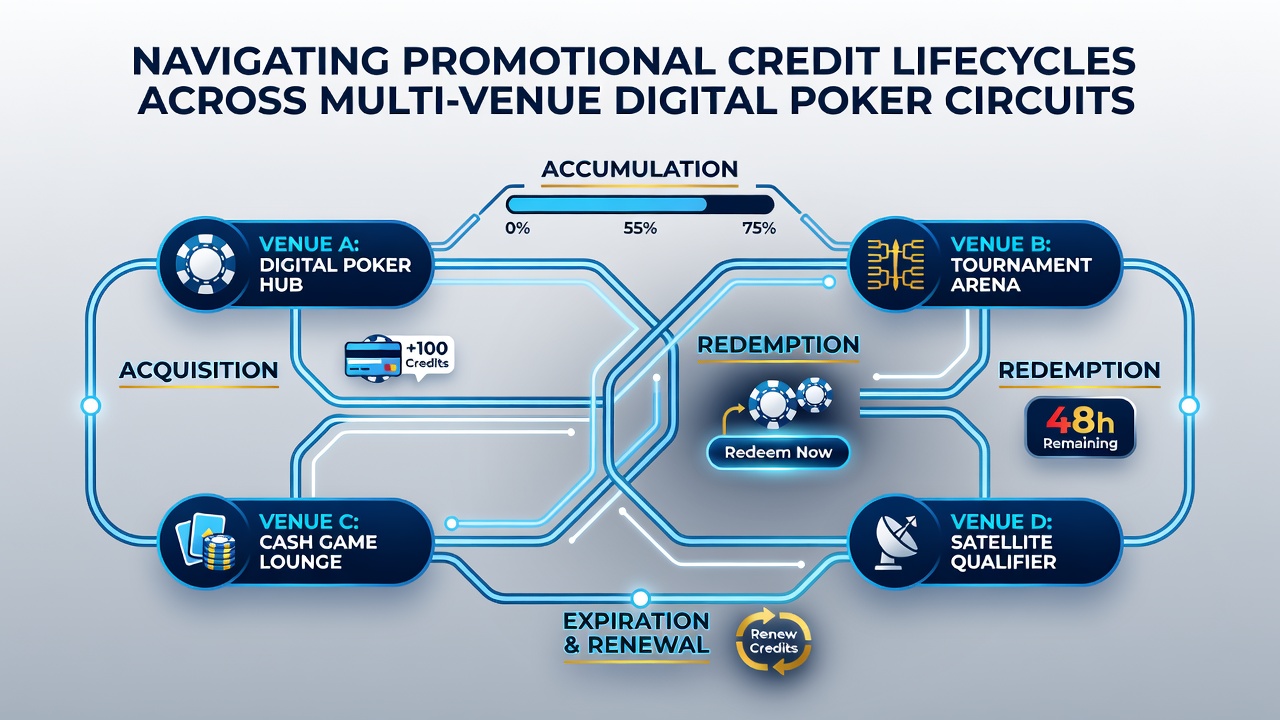
Transfer mechanisms rely on centralized wallets or loyalty point exchanges that apply conversion multipliers, and these multipliers shift according to each venue's risk parameters. Evidence from transaction logs reveals that credits moved during high-volume periods encounter fewer processing delays, whereas low-activity windows extend settlement times by several business days. Those managing multiple accounts report improved outcomes when they prioritize venues with reciprocal agreements that preserve full credit value during transfers.
Regulatory Influences on Lifecycle Management
Jurisdictional rules shape credit duration and transferability, with North American frameworks often mandating clear disclosure of expiration dates while European and Asian markets impose additional consumer protection layers around bonus wagering. Industry reports compiled by the Australian Institute of Gambling Research document how venue networks adapt lifecycle parameters to satisfy simultaneous compliance across borders, resulting in standardized 60-day base periods supplemented by venue-specific extensions. Participants who review updated terms monthly avoid unintended losses because operators announce policy shifts through account notifications rather than static help pages.
Technical integrations between venues enable real-time balance visibility, yet latency during peak hours can delay reflected updates and create temporary discrepancies that affect redemption planning. Circuit administrators address these issues through API documentation that developers incorporate into third-party tracking applications, allowing users to maintain accurate personal ledgers across all connected sites.
Practical Strategies Employed by Participants
Seasoned users segment their credit portfolios by expiration priority and allocate play sessions to satisfy the most time-sensitive requirements first. They monitor contribution percentages that vary between cash games and tournaments, and they adjust volume distribution accordingly to maximize progress toward unlock thresholds. Platform dashboards now include consolidated views that aggregate credits from partner venues, reducing the need for manual cross-referencing that previously led to overlooked deadlines.
Case examples from transaction datasets demonstrate that players who combine loyalty tier benefits with strategic transfers sustain longer effective credit lifecycles than those relying on isolated site usage. Automated reminder systems, when configured with venue-specific rules, further decrease forfeiture incidents by surfacing alerts days ahead of critical dates.
Conclusion
Digital poker circuits continue to refine promotional credit systems through improved interoperability and clearer rule standardization, while participants benefit from systematic tracking that accounts for each venue's unique parameters. Data released through July 2026 underscores ongoing adjustments in lifecycle durations as operators respond to both player behavior patterns and evolving regulatory expectations across regions. Those who maintain updated records and leverage cross-site tools position themselves to fully utilize available credits before expiration occurs.