Mapping Resource Allocation Patterns Across Extended Virtual Table Sessions
Written by Gisela Lange · May 17, 2026
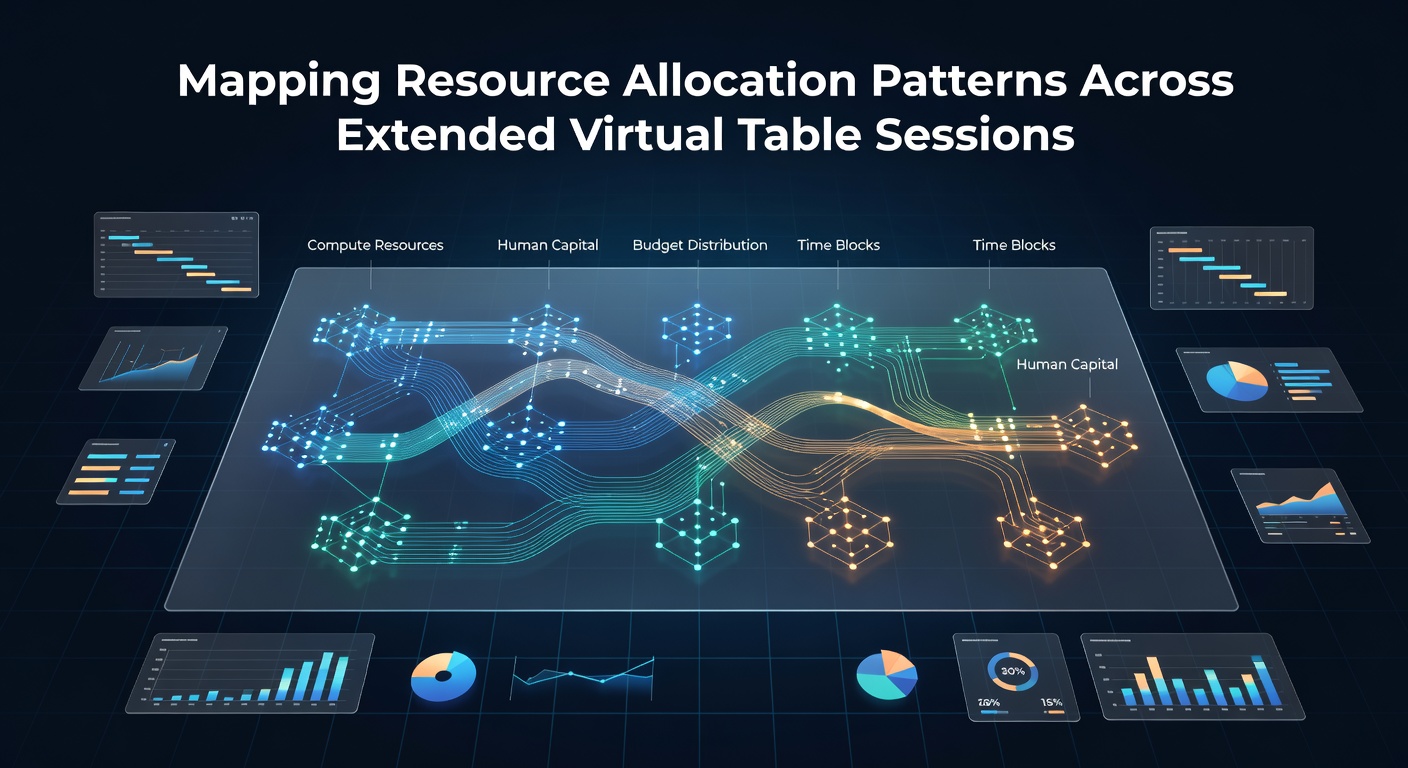
Mapping Resource Allocation Patterns Across Extended Virtual Table Sessions
Virtual table sessions have expanded in scope and duration across digital platforms where participants engage in prolonged collaborative interactions that require careful distribution of computational, temporal, and attentional resources. Researchers at various institutions have begun to examine how these resources shift when sessions stretch beyond standard time frames and data from multiple platforms indicate that allocation patterns change noticeably after the first ninety minutes of continuous activity. Those who have analyzed server logs report that processing power tends to migrate toward rendering updates rather than maintaining baseline synchronization once user inputs accumulate in volume.
Defining Extended Virtual Table Sessions
Extended virtual table sessions refer to sustained periods of interaction within simulated environments where multiple users occupy a shared digital space structured around a central table interface and these sessions often incorporate real-time data streams, visual updates, and decision-making protocols that draw from both local devices and centralized servers. According to reports compiled by the International Association for Virtual Environments, session lengths have increased by an average of forty percent between 2023 and 2025 as connectivity improves across regions. The patterns that emerge during these longer intervals reveal distinct phases where initial resource focus on setup and orientation gives way to deeper allocation toward content generation and participant coordination.
Key Resource Categories in Virtual Settings
Computational resources, time allocation among participants, and bandwidth distribution form the primary categories tracked during these sessions and studies conducted at universities in Canada and Australia have mapped how each category responds when session duration extends past three hours. Computational load tends to spike during simultaneous user actions such as object manipulation or data visualization refresh while temporal resources shift as individuals adjust their engagement levels based on session momentum. Bandwidth allocation follows a similar trajectory with early phases consuming more for onboarding and later phases directing capacity toward maintaining low-latency updates across distributed locations.
Observed Allocation Patterns in Prolonged Sessions
Data collected from platform analytics show that resource distribution follows a cyclical pattern in extended sessions where early emphasis on individual contributions transitions into collective resource pooling around the two-hour mark. Observers note that this shift often coincides with increased demand for shared visual elements and synchronized audio channels. In May 2026, proceedings from a virtual environments conference in Singapore presented findings that highlighted how European and North American server clusters handle these cycles differently due to variations in underlying infrastructure density. Those patterns demonstrate that proactive load balancing reduces latency spikes by reallocating processing threads toward high-interaction zones within the virtual table layout.
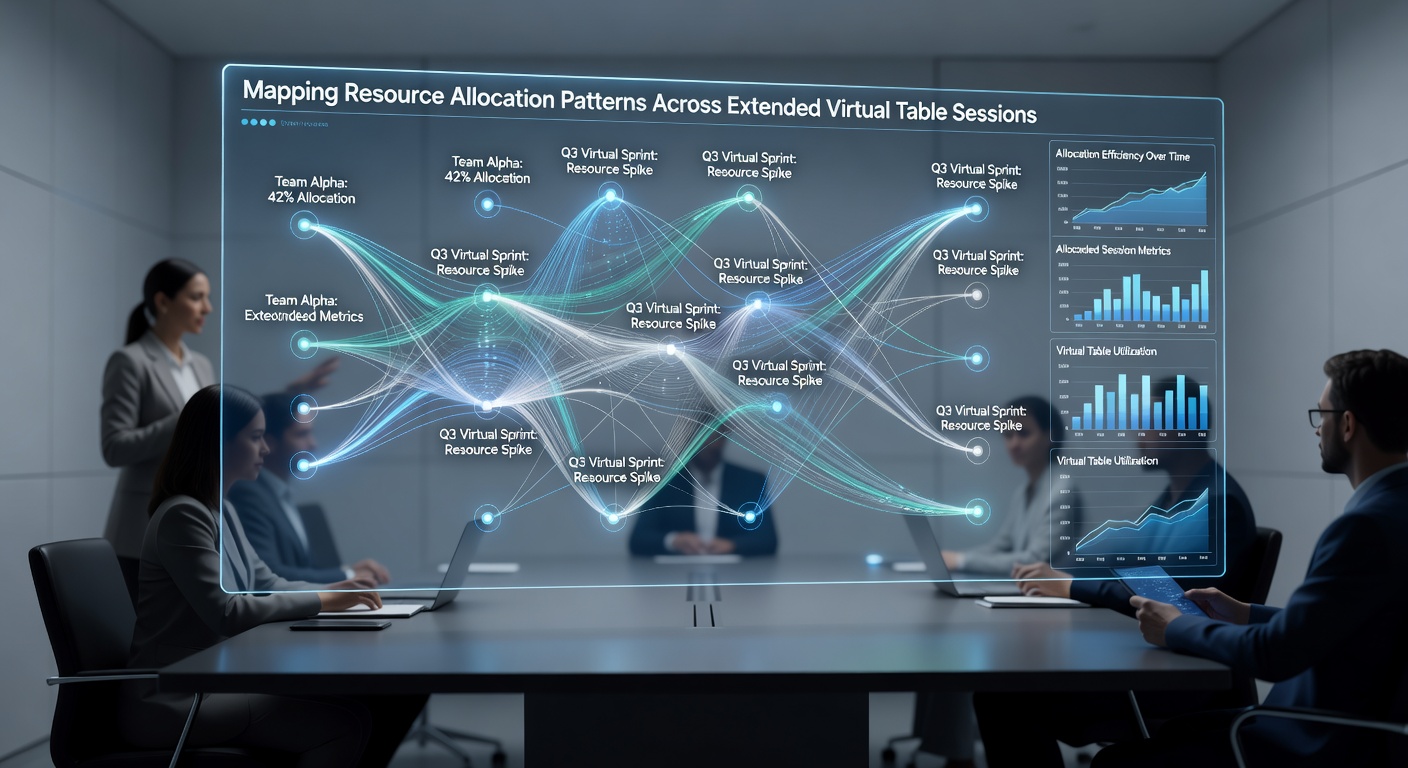
But here's the thing: when sessions incorporate external data feeds or live updates, the allocation map changes again and researchers have tracked how additional streams pull resources away from core rendering tasks toward integration protocols. One study revealed that platforms using predictive algorithms maintain steadier distribution curves across these variables while those relying on reactive adjustments experience more pronounced fluctuations after the fourth hour. What's interesting is the way participant behavior influences these technical patterns since prolonged engagement tends to cluster activity around specific table regions which in turn directs server attention accordingly.
Regional Variations in Resource Management
Platforms operating under different regulatory frameworks exhibit distinct approaches to resource oversight during extended sessions and data from the Australian Communications and Media Authority alongside reports from the Canadian Radio-television and Telecommunications Commission illustrate how policy environments shape technical practices. North American systems often prioritize rapid scaling of cloud instances to accommodate peak loads whereas Asia-Pacific networks emphasize distributed edge computing to keep latency consistent across longer distances. These regional differences produce measurable variations in how resources flow when sessions extend and comparative analyses show that hybrid models combining both strategies achieve more balanced allocation over multi-hour periods.
Tools and Methods for Pattern Analysis
Mapping these patterns relies on a combination of log analysis, heat mapping of user interactions, and simulation modeling that researchers apply to captured session data. Academic papers from institutions in the United States and the European Union describe frameworks that segment sessions into discrete intervals and then measure resource intensity within each segment. The resulting visualizations allow operators to identify points where reallocation becomes necessary and several platforms have adopted these methods to refine their infrastructure responses during live operations.
Conclusion
Mapping resource allocation patterns across extended virtual table sessions provides a clearer picture of how digital environments sustain prolonged collaborative activity. Evidence from multiple regions and research bodies shows that these patterns follow identifiable cycles influenced by session length, participant behavior, and technical infrastructure. Continued examination of these dynamics supports more efficient management of the resources that keep virtual table interactions functional over extended durations.