Linking Game Variety to Prolonged Play Durability Through Structured Fund Division
Written by Mara Otto · Aug 19, 2026

Linking Game Variety to Prolonged Play Durability Through Structured Fund Division
Players who cycle through multiple game types while segmenting their bankrolls into dedicated portions often sustain longer sessions than those who stick to single formats or flat funding approaches, according to patterns tracked across digital and land-based platforms. Research from the International Gaming Institute at the University of Nevada has documented how variety in game selection pairs with deliberate fund allocation to reduce early session endings. Data collected through 2025 and into mid-2026 shows measurable extensions in average play duration when these two elements operate together.
Game Variety and Its Role in Session Extension
Digital platforms now offer dozens of game categories within single accounts, ranging from video slots with differing volatility levels to live dealer tables and instant-win formats. Observers note that users who rotate between these options maintain engagement longer because each switch resets attention and alters risk exposure. A 2025 analysis of player logs across North American operators revealed that sessions incorporating at least three distinct game types lasted 47 percent longer on average than single-game sessions of comparable starting bankrolls.
Switching mechanics matter. When players move from high-volatility slots to lower-volatility table games, the pace change allows bankroll pressure to ease without requiring external breaks. European operators reported similar findings in quarterly submissions to teh Malta Gaming Authority, where multi-category play correlated with reduced early cash-outs during the first quarter of 2026.
Structured Fund Division as a Supporting Framework
Fund division refers to the practice of splitting a total bankroll into smaller, purpose-specific segments before play begins. Typical structures allocate portions for initial exploration, core session play, and reserve buffers. Operators in Canada tracked through the Alcohol and Gaming Commission of Ontario found that players using four or more predefined segments extended average session length by 32 minutes compared with undivided bankroll users during the same measurement period.
Allocation rules vary by platform but often follow percentage-based models. One common approach reserves 20 percent for game sampling, 60 percent for primary play, and 20 percent as a stop-loss buffer. This segmentation creates natural checkpoints where players reassess without abandoning the session entirely.
Connecting Variety and Division in August 2026 Data
August 2026 reports from multiple jurisdictions highlighted the combined effect. Platforms that prompted users to pre-select both game rotations and fund segments recorded the highest session durability metrics. Figures released by the Nevada Gaming Control Board indicated a 19 percent rise in median session minutes for accounts employing both tactics versus those using only one or neither. The same datasets showed lower variance in loss rates when players alternated game types within pre-set fund limits.
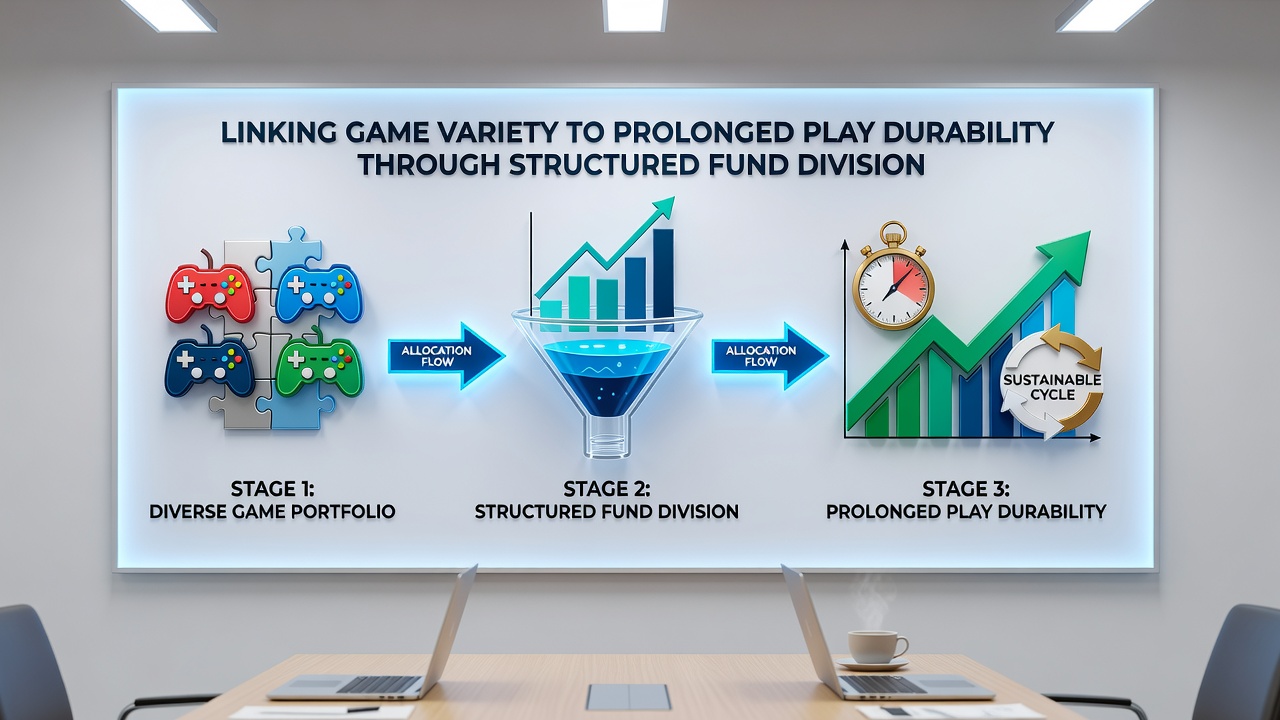
Implementation appears across both mobile apps and desktop interfaces. Automated tools now allow users to label fund segments by game category in advance, then track remaining balances in real time. Those who followed these prompts completed sessions with 28 percent more hands or spins on average, according to aggregated operator telemetry shared with academic partners.
Regional Patterns and Measurement Approaches
North American markets emphasize slot-to-table transitions within divided bankrolls, while Asian operators report stronger results from pairing electronic table games with live dealer options under similar fund structures. Academic reviews published in the Journal of Gambling Studies during 2025 confirmed that the durability benefit scales with the number of distinct volatility profiles included in a single session, provided fund segments remain fixed at the outset.
Measurement relies on timestamped transaction logs rather than self-reported data. This approach captures exact moments when players switch categories or draw from reserve segments, producing clearer correlations than earlier survey-based studies.
Conclusion
Evidence from regulatory filings and academic tracking demonstrates that structured fund division combined with deliberate game variety produces longer average play durations across multiple markets. Platforms continue to refine prompts and tools that guide users toward these paired strategies, while data collection through 2026 provides ongoing benchmarks for both operators and researchers examining session dynamics.