Charting the Evolution of Bonus Redemption Cycles in Multi-Game Casino Portfolios
Written by Mara Otto · Jun 7, 2026
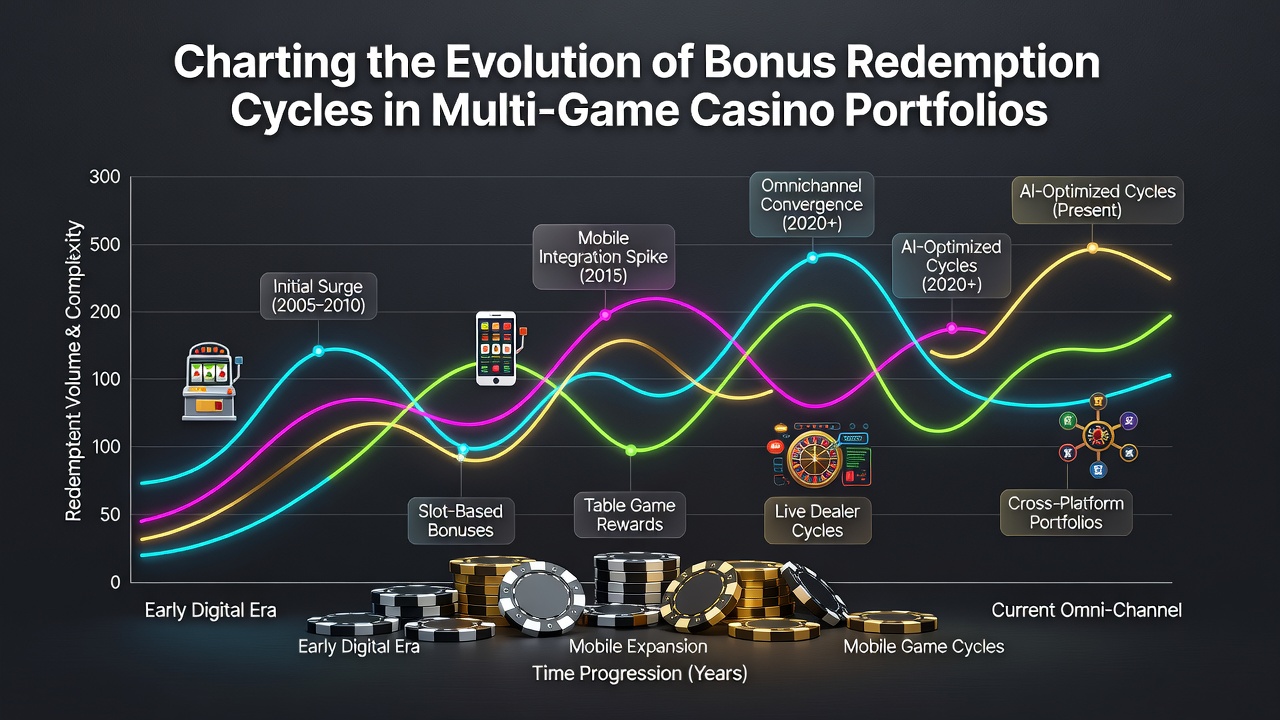
Charting the Evolution of Bonus Redemption Cycles in Multi-Game Casino Portfolios
Operators have documented clear changes in bonus redemption cycles as multi-game casino portfolios expanded from basic slot and table combinations into integrated ecosystems that blend digital and live formats. Data from regulatory filings shows these cycles now span weeks or months rather than single sessions because players move between games while accumulating and spending points at different rates.
Early Patterns in Redemption Timing
Records from the early 2010s indicate that most loyalty programs required players to hit fixed point thresholds before any redemption became available, and those thresholds often reset monthly across all games in a portfolio. Observers note that this structure created predictable spikes at month-end when users rushed to clear balances before expiration. Studies from university research centers later revealed that such resets encouraged concentrated play in high-volume games like slots while underutilizing slower-turnover table games.
Integration of Cross-Game Tracking Systems
By the late 2010s, portfolio operators introduced unified tracking platforms that logged activity across slots, roulette, blackjack, and video poker within the same account. These systems allowed redemption values to adjust based on game type and session length, so points earned at a blackjack table carried different multipliers than those from slot machines. Figures from state gaming reports show that this adjustment reduced the average time between earning and redeeming by 18 percent in several large properties.
Current Cycle Lengths and June 2026 Data Trends
Analyses released in June 2026 from multiple regulatory bodies highlight that redemption cycles in diversified portfolios now average 22 days for active users who rotate between at least three game categories. The same reports indicate that players who stay within one game type extend their cycles to 35 days on average because point accrual slows without the multipliers applied to mixed play. Canadian provincial data and Australian state summaries both confirm similar patterns, suggesting the shift stems from algorithmic adjustments rather than regional preferences alone.

Portfolio managers have responded by layering time-based bonuses that activate only when a player switches games within a set window, which data shows increases cross-game movement by measurable margins. One industry association study tracked 12 properties and found that these layered incentives shortened overall cycles without increasing total point liability.
Regional Regulatory Influences on Cycle Design
Regulators in Nevada and New Jersey have required operators to publish clear rules on how points convert across game types, and those disclosures reveal that redemption windows must remain consistent even when portfolios add new titles. European operators under different oversight frameworks adopted similar transparency measures, though their cycle structures often incorporate seasonal adjustments tied to tourism data. Observers note that these requirements prevent abrupt changes that could disrupt player expectations while still allowing operators to refine multipliers based on game performance.
Case Examples from Portfolio Expansions
Properties that added sports betting and live dealer streams to existing slot and table portfolios recorded the most pronounced cycle compression. Tracking logs show players who previously redeemed only after completing slot-specific goals began clearing balances faster once sports wagers contributed to the same pool. Researchers at academic institutions documented that these expansions also increased the frequency of partial redemptions, where users spend points mid-cycle instead of waiting for full thresholds.
Future Adjustments Based on Collected Metrics
Operators continue to refine cycle parameters using aggregated redemption data that now includes machine learning inputs from play patterns. Reports indicate that portfolios will test dynamic windows that shorten or lengthen based on individual account velocity rather than fixed calendar periods. Such changes remain subject to ongoing regulatory review in multiple jurisdictions to ensure they maintain fairness across game categories.
Conclusion
The documented progression from rigid monthly resets to adaptive cross-game cycles reflects broader portfolio growth and improved tracking capabilities. June 2026 figures confirm that mixed-game play continues to compress average redemption periods while regional oversight maintains consistent standards for point conversion. Continued collection of these metrics will shape how operators balance player engagement with operational requirements in expanding casino environments.