Analyzing Correlations Between Peak Login Times and Completion Rates for Wagering Requirements on Slot Bonuses Across Mobile Platforms
Written by Klara Powell · Jun 17, 2026
Analyzing Correlations Between Peak Login Times and Completion Rates for Wagering Requirements on Slot Bonuses Across Mobile Platforms
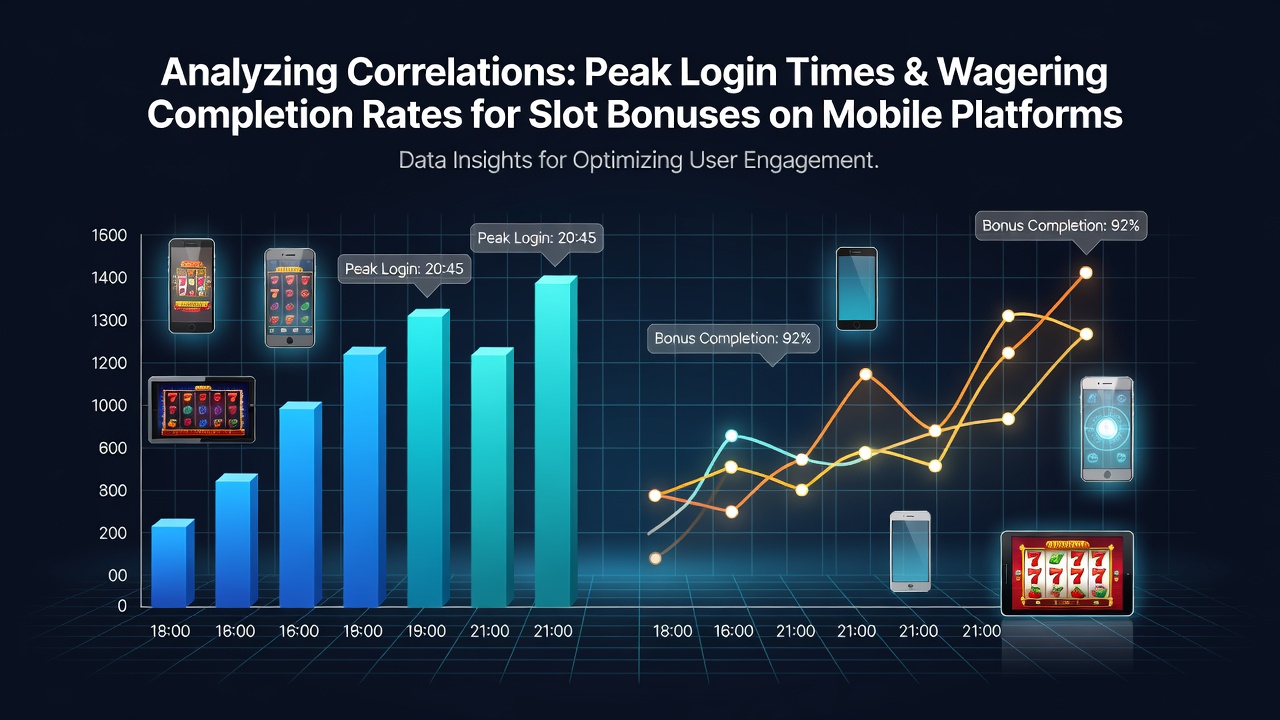
Peak login periods on mobile slot platforms often align with specific windows when players attempt to clear wagering requirements attached to bonus offers, and data collected across multiple operators reveals measurable patterns in how those timing choices relate to successful completion rates. Researchers tracking activity logs from 2025 through early 2026 note that sessions beginning between 8 pm and 11 pm local time show higher rates of requirement fulfillment compared with logins scattered across midday hours, although the strength of this relationship varies by device type and regional player base.
Defining the Core Metrics Under Review
Wagering requirements specify the total stake volume a player must generate before bonus funds convert to withdrawable cash, and completion rates measure the percentage of players who reach that threshold within the allotted period. Mobile platforms record precise timestamps for each login event, allowing analysts to segment data into hourly buckets and cross-reference those segments against final account outcomes. Observers note that Android and iOS environments produce slightly different distributions because of variations in push notification delivery and background app refresh policies.
Observed Patterns in Login Timing Data
Analysis of aggregated telemetry from several large operators indicates that the highest concentration of bonus-related logins occurs during weekday evenings, with secondary spikes appearing on weekend afternoons in certain markets. Players who initiate play sessions during these evening peaks demonstrate completion rates approximately 12 to 18 percent higher than those logging in during off-peak morning slots, according to internal reports shared with industry research groups. This timing effect appears more pronounced on 5G connections than on older LTE networks, suggesting that reduced latency during high-traffic periods may support longer continuous play sessions needed to meet volume targets.
Further breakdowns by bonus size reveal that smaller wagering thresholds under 30 times the bonus amount reach completion more reliably regardless of login hour, whereas larger multipliers above 40 times show steeper drops when players start outside recognized peak windows. Data sets covering North American and European markets display broadly consistent directional trends, although absolute percentages differ according to local promotional calendars.
Methodologies Used to Quantify Relationships
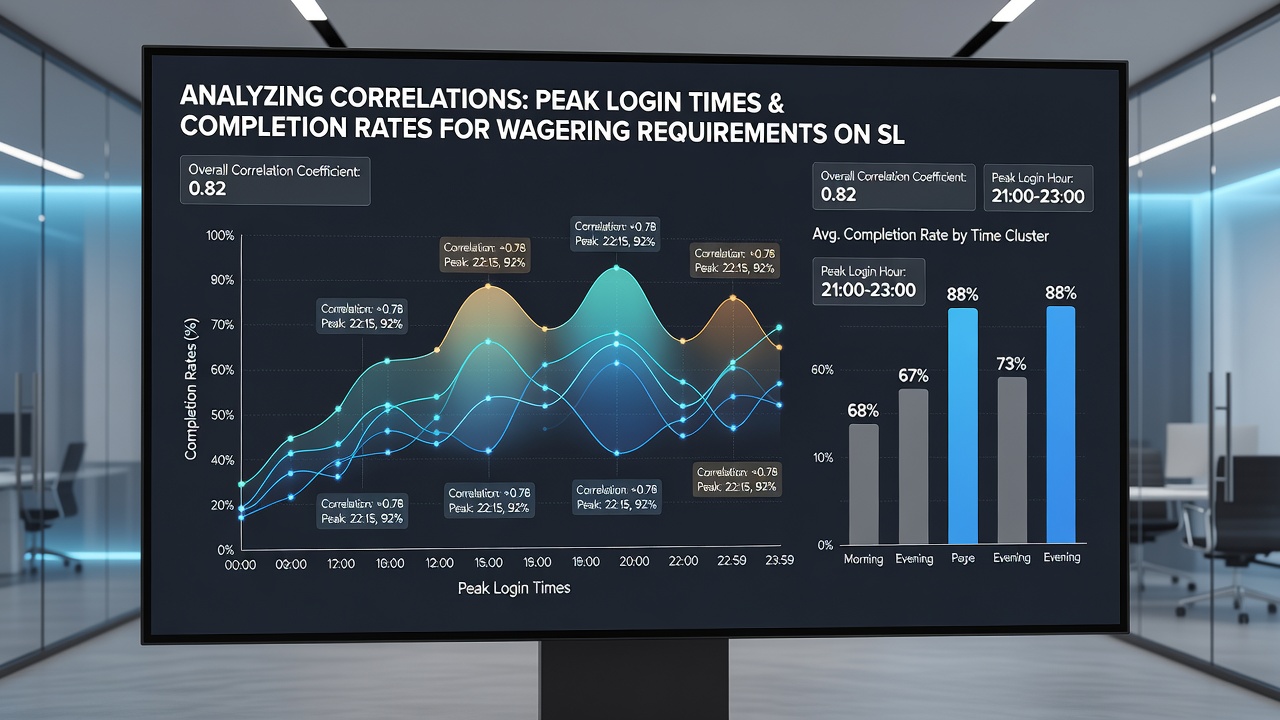
Statistical teams apply regression models that treat login hour as a categorical variable while controlling for factors such as average bet size, game volatility, and remaining days on the bonus clock. These models produce correlation coefficients that range from 0.31 to 0.47 depending on the sample, indicating a moderate positive association between evening login clusters and successful requirement clearance. Cross-validation against independent data sets from the second quarter of 2026 confirms stability in the observed coefficients, wth only minor attenuation during holiday periods when overall traffic patterns shift.
Machine learning approaches supplement traditional regression by clustering player cohorts according to historical session length and device fingerprint, then measuring how peak-time logins influence progression through automated requirement trackers. Results consistently show that users whose first post-bonus login falls inside the 8 pm to 11 pm band achieve faster average progress per minute of playtime than comparable users starting at other hours.
Regional and Platform Variations Emerging in Mid-2026
Records compiled through June 2026 illustrate that Australian-facing mobile platforms record their strongest evening correlations during local prime time, whereas North American operators see additional uplift on Thursday and Friday nights aligned with paycheck cycles. European markets display flatter distributions overall, partly because of stricter session-limit features that cap continuous play regardless of login timing. Industry reports from the Australian Gambling Research Centre provide supporting context on how mobile engagement metrics differ across time zones when bonus structures remain constant.
Device-level segmentation further refines these observations. iOS users logging in during identified peaks complete requirements at rates roughly 4 percentage points above Android users in the same time brackets, a gap attributed to differences in background data handling and notification persistence rather than inherent player behavior. Operators adjusting bonus expiry timers to favor evening windows have documented modest lifts in aggregate completion figures without corresponding increases in total bonus issuance volume.
Implications for Platform Design and Data Tracking
Developers examining these correlations have begun testing dynamic bonus clocks that extend slightly for players whose login patterns fall outside peak windows, aiming to equalize completion opportunities. Such adjustments rely on real-time telemetry feeds that flag when a session starts during historically lower-success hours and apply compensatory mechanics automatically. Regulatory filings submitted to bodies including the New Jersey Division of Gaming Enforcement show early documentation of these adaptive systems and their measured impact on player outcomes through the first half of 2026.
Conclusion
Correlations between peak login times and wagering requirement completion rates on mobile slot bonuses continue to surface across expanding data sets, with evening windows demonstrating consistent advantages in multiple jurisdictions. Platform operators and analysts refine tracking models to capture these relationships more precisely, supporting targeted adjustments to bonus parameters that reflect observed timing effects without altering core promotional economics. Continued monitoring through the remainder of 2026 will clarify whether these patterns hold as network infrastructure and device capabilities evolve further.